
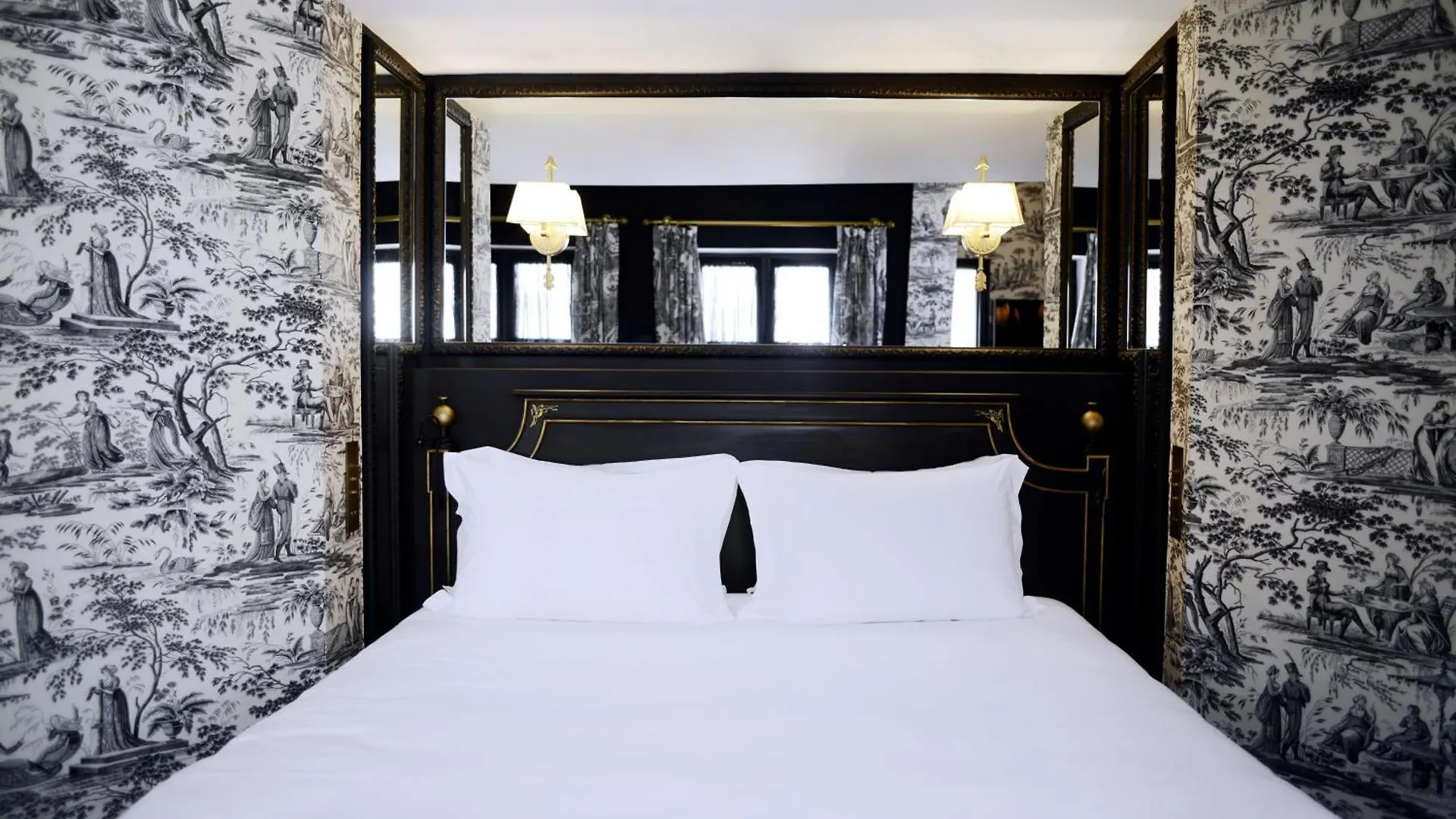
Paris City Centre concentrates the highest density of historically significant hotels in Europe - 17th-century mansions converted into boutique stays, Belle Époque buildings steps from the Louvre, and former convents in the Marais that still carry their original stone arches. This guide covers 15 historical hotels across the most central arrondissements, from Île Saint-Louis to the 8th, comparing location, room character, and practical booking value so you can choose the one that actually fits your trip.
What It's Like Staying in Paris City Centre
Staying in central Paris means living within direct walking reach of the city's most visited monuments - the Louvre, Notre-Dame, the Marais, and the Seine riverbanks are all connected on foot without needing the metro. Most central arrondissements (1st through 8th) are walkable within 25 minutes to the majority of major landmarks, which significantly reduces daily transport costs and time. The trade-off is density: streets around Les Halles, Saint-Michel, and Châtelet can feel heavily congested during tourist season, particularly between June and September, which affects both street-level noise and morning breakfast queues at nearby cafés.
Transport access is exceptional - Paris City Centre sits above one of the densest metro networks in Europe, with lines 1, 4, 7, and the RER B and C all intersecting within a few hundred metres of most hotels listed here, giving direct access to both Charles de Gaulle and Orly airports. Travellers who prioritise cultural immersion over space and quiet benefit most from staying here; those seeking larger rooms at lower prices typically do better in the 15th or 11th arrondissements.
Pros:
- Walking access to the Louvre, Notre-Dame, Marais, and Seine within 25 minutes on foot
- Multiple metro and RER lines provide fast airport connections from the city core
- Historical hotels here occupy genuine landmark buildings unavailable in outer districts
Cons:
- Street noise from tourists and delivery vehicles is persistent, especially near Les Halles and Saint-Michel
- Room sizes are typically smaller than equivalent-price hotels outside the centre
- Peak-season foot traffic between June and September makes spontaneous restaurant access difficult
Why Choose a Historical Hotel in Paris City Centre
Historical hotels in Paris City Centre occupy buildings that are themselves part of the city's architectural record - 17th-century private mansions, 18th-century convent structures, and 19th-century Haussmann-era facades. These properties offer something structurally impossible in modern builds: original stone vaulted ceilings, exposed wooden beams, monumental fireplaces, and internal courtyards that provide a genuine acoustic buffer from street activity. Rates at historical boutique properties in the central arrondissements typically run around 30% higher than chain hotels at the same star rating in the same district, but that premium reflects the physical character of the building rather than purely the brand. The practical trade-off is room footprint - historical structures rarely accommodate the room dimensions of purpose-built modern hotels, and bathrooms in converted mansions tend to be compact relative to the nightly rate.
For travellers whose primary motivation is cultural immersion, waking up inside a building that predates the French Revolution carries a different experiential weight than a contemporary design hotel two streets away. The Latin Quarter, Marais, Île Saint-Louis, and the 1st arrondissement concentrate the highest density of genuinely historical hotel buildings in the city, making those zones the most productive areas to search within this category.
Pros:
- Original architectural features - beams, fireplaces, courtyard fountains - that modern builds cannot replicate
- Interior courtyards and thick stone walls provide natural sound insulation despite central locations
- Properties in this category are often small enough (under 50 rooms) to offer more attentive service than large chain hotels
Cons:
- Room sizes in converted historical buildings are structurally constrained and rarely exceed 20 square metres in standard categories
- Lift access is sometimes retrofitted and may not reach all floors, an important consideration for guests with luggage or mobility requirements
- Premium pricing around 30% above chain rates is difficult to justify on a purely amenity-to-amenity comparison
Practical Booking & Area Strategy for Paris City Centre
Micro-location matters significantly within central Paris. Hotels positioned on or directly adjacent to Rue de Rivoli, Boulevard Saint-Germain, and Rue Saint-Honoré offer the best balance of landmark proximity and metro access - Concorde, Palais Royal-Musée du Louvre, and Saint-Paul stations are all on these axes and connect directly to La Défense, CDG via RER A, and Orly via RER B interchange. For the Latin Quarter, streets within 300 metres of the Panthéon (Rue Soufflot, Rue des Grands Hommes) offer quieter nights than those directly on Boulevard Saint-Michel, which carries bar and tourist foot traffic until after midnight. Île Saint-Louis properties sit within a 10-minute walk of both Notre-Dame and the Marais with almost no vehicle through-traffic - making it one of the quietest micro-locations in central Paris despite its central geography.
On the Right Bank, the 8th arrondissement around Avenue Montaigne and the Champs-Élysées corridor functions as a distinct price tier - hotels here command a luxury premium due to proximity to flagship retail and business activity. For historical stays, the 1st arrondissement near the Tuileries and Palais Royal delivers comparable landmark access at a more competitive rate. Book at least 8 weeks in advance for stays between April and October, when central Paris occupancy in the historical boutique category reaches capacity well before arrival dates. January and February offer the most availability and reduced nightly rates, with the city quieter but most museums and cultural sites fully operational.
Best Value Historical Hotels in Paris City Centre
These properties deliver strong central positioning and authentic historical character at rates that remain accessible relative to the luxury tier - most are 3- to 4-star builds occupying genuinely historical structures with good metro proximity.
-
1. Hotel De Josephine Bonaparte
Show on map


Rooms filling fast – secure the best rate!
fromUS$ 184
-
2. Hotel Marais Grands Boulevards
Show on map


Just a few rooms left at the best rate!
fromUS$ 174
-
3. Hotel Des Grands Hommes
Show on map


Best price guarantee
fromUS$ 238
-
4. Hotel Des Deux-Iles - Notre-Dame
Show on map


Hurry – almost gone at this price!
fromUS$ 159
-
5. La Chambre Du Marais
Show on map


Hurry – almost gone at this price!
fromUS$ 426
-
6. Novotel Paris Les Halles
Show on map


Just a few rooms left at the best rate!
fromUS$ 369
-
7. Hotel Vendome Saint-Germain
Show on map


Rooms filling fast – secure the best rate!
fromUS$ 93
-
8. Hotel Villa Madame - Saint-Germain-Des-Pres
Show on map


Best price guarantee
fromUS$ 208
-
9. Grand Hotel Saint Michel
Show on map


Best price guarantee
fromUS$ 185
Best Premium Historical Hotels in Paris City Centre
These properties operate at the higher end of the historical hotel spectrum in Paris - 4- and 5-star builds with flagship spa facilities, luxury room fitments, and landmark-adjacent positioning that justifies the rate premium for guests where architectural experience and service depth are primary criteria.
-
10. Hotel D'Aubusson
Show on map


Rooms filling fast – secure the best rate!
fromUS$ 419
-
11. Hotel Cambon
Show on map


Just a few rooms left at the best rate!
fromUS$ 218
-
12. Grand Hotel Du Palais Royal
Show on map


Hurry – almost gone at this price!
fromUS$ 191
-
13. La Maison Champs Elysees
Show on map


Rooms filling fast – secure the best rate!
fromUS$ 299
-
14. Grand Powers Hotel
Show on map


Just a few rooms left at the best rate!
fromUS$ 325
-
15. Mandarin Oriental Lutetia, Paris
Show on map


Hurry – almost gone at this price!
fromUS$ 2219
Smart Travel & Timing Advice for Historical Hotels in Paris City Centre
The most significant pricing and availability pressure for historical hotels in central Paris occurs between late March and mid-October, driven by museum tourism, fashion weeks (January, March, June, September), and summer school holidays across Europe. April through June is the most competitive booking window - Parisian weather is at its most stable, tourist density has not yet peaked to summer levels, and the city's historical buildings are best experienced with some breathing room on the streets. July and August bring the highest visitor volumes to the Latin Quarter, Marais, and Île Saint-Louis, which are the districts most concentrated in this guide; expect breakfast queues, slower service, and reduced room availability if booking inside 6 weeks of arrival.
January and February offer the most available inventory at the lowest rates - the city is quieter, all major museums remain open, and historical hotel interiors with fireplaces and stone walls are experientially more compelling in winter than in summer heat. A minimum of 3 nights is the practical threshold to justify the logistics of staying in a central Paris historical property; shorter stays rarely allow enough time to absorb both the building's character and the surrounding neighbourhood on foot. For stays during the Christmas and New Year period, book at least 10 weeks in advance as central Paris historical properties sell out entirely in the premium category.


